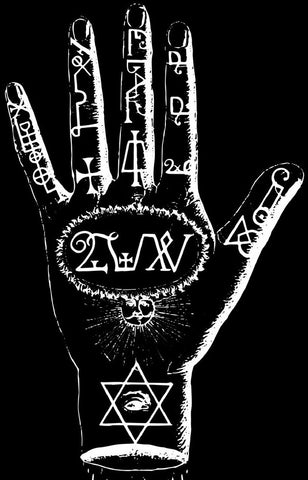
Illuminati Symbols Explained: The Eye, Pyramid, and Hidden Meanings in Southeast Asia
Introduction: Why Are Illuminati Symbols Everywhere?
From music videos and social media posts to clothing, logos, and internet discussions, symbols associated with the Illuminati continue to attract curiosity. Among the most recognizable are the all-seeing eye, the pyramid, and the mysterious owl. Some people interpret these images as evidence of secret societies, hidden power, or a worldwide network influencing politics, entertainment, and business.
In Southeast Asia, where social media connects global conspiracy theories with local cultures and traditions, these symbols can generate particularly intriguing questions. Does the appearance of an eye or pyramid prove a connection to the Bavarian Illuminati? Are these symbols genuinely linked to a secret organization, or have their meanings changed over time?
To answer these questions, it is necessary to separate documented history from speculation.
The historical Bavarian Illuminati was a real organization founded in eighteenth-century Bavaria. However, the modern claims surrounding Illuminati symbols often extend far beyond the available historical evidence.
This article explores the origins of the most famous Illuminati-associated symbols, explains how they acquired their modern meanings, and examines how people interpret them in Southeast Asia.
1. What Was the Bavarian Illuminati?
Before examining the symbols, it helps to understand the organization with which they are commonly associated.
The Bavarian Illuminati was founded on May 1, 1776, by Adam Weishaupt, a professor of canon law at the University of Ingolstadt in Bavaria, now part of Germany.
The organization emerged during the European Enlightenment, a period when philosophers and intellectuals debated reason, religious authority, political power, education, and individual liberty.
Weishaupt sought to establish a private society that promoted Enlightenment ideas and encouraged members to question established authority. The organization developed internal ranks, membership rules, and methods of communication influenced partly by the secret societies of its era.
Although the Illuminati attracted members from educated and influential circles, its history should not be confused with modern claims that a single secret organization controls governments, banks, celebrities, or world events.
The Bavarian authorities moved against secret societies, and the Illuminati was prohibited in Bavaria in the 1780s. The organization was suppressed, and there is no convincing historical evidence demonstrating an uninterrupted continuation of Weishaupt’s original group into the present day.
This distinction matters because many modern theories assume that every symbol associated with secret societies must represent the same organization across centuries.
History is more complicated than that.
2. The All-Seeing Eye: What Does It Really Mean?
The all-seeing eye is arguably the most recognizable symbol associated with modern Illuminati conspiracy theories.
It is usually depicted as an eye inside a triangle, sometimes surrounded by rays of light. Online discussions frequently describe it as a sign of surveillance, hidden authority, or secret knowledge.
However, the symbol has a history that predates the Bavarian Illuminati.
The Eye of Providence
The eye is commonly known as the Eye of Providence. In Christian artistic traditions, it has been used to represent divine providence: the belief that God sees, understands, and watches over creation.
The triangle surrounding the eye is sometimes interpreted as a reference to the Christian Trinity. Rays of light may communicate divine glory, illumination, or heavenly presence.
The precise meaning of a particular image depends on its historical context, the artist, and the tradition in which it was created.
Because eye imagery existed before the Illuminati was founded in 1776, the presence of an eye alone cannot establish that an image belongs to the organization.
Why Do People Associate It With the Illuminati?
The modern association developed through the overlapping histories of religious imagery, political symbolism, secret societies, popular culture, and conspiracy literature.
Once people began interpreting the eye as a sign of hidden power, its appearance in buildings, artwork, currency, films, and music videos became material for speculation.
The internet accelerated this process. A symbol can now be photographed, removed from its original context, and presented as supposed evidence of a secret connection within seconds.
Yet an interpretation is not the same as proof.
To establish that a symbol represents a particular organization, researchers need more than visual resemblance. They need contextual evidence, reliable documentation, or a credible connection to the people or institution involved.
3. The Pyramid: A Symbol of Power or Something Else?
The pyramid is another image frequently associated with the Illuminati.
In modern conspiracy content, pyramids are often described as representations of a hidden hierarchy, with a small group of powerful individuals supposedly controlling everyone below them.
That interpretation is popular, but it should not automatically be treated as the historical meaning of every pyramid image.
Pyramids have appeared in architecture, religious traditions, monuments, decorative art, and political symbolism across different periods and societies.
Their meanings vary according to context.
The Pyramid on the Great Seal of the United States
One of the best-known examples is the unfinished pyramid on the reverse of the Great Seal of the United States.
The design was approved in 1782, six years after the founding of the Bavarian Illuminati.
The pyramid has thirteen levels, commonly associated with the original thirteen American states. Its unfinished appearance has traditionally been interpreted as representing a developing nation, while the accompanying Latin mottoes express ideas connected with providence and the new American republic.
Above the pyramid is the Eye of Providence.
The combination of an eye and a pyramid is one reason these images have become central to modern Illuminati theories.
However, the existence of the design does not prove that the Bavarian Illuminati created it, controlled its designers, or secretly directs the United States government.
A historical claim of that magnitude requires direct and credible evidence. Similarity between symbols is not sufficient.
What Does “Novus Ordo Seclorum” Mean?
The Latin phrase Novus Ordo Seclorum appears beneath the pyramid on the Great Seal.
It is commonly translated as “A New Order of the Ages.” In its historical context, the phrase refers to the beginning of a new era associated with American independence.
Conspiracy discussions sometimes translate the phrase as “New World Order” and interpret it as a declaration of a secret plan for global domination.
That interpretation changes the phrase’s context and goes beyond what the motto itself establishes.
A responsible historical reading considers the design’s documented origins, the political circumstances of its creation, and the explanations provided by the people involved.
4. The Owl of Minerva: Wisdom, Knowledge, and Secret Societies
The owl is another symbol that sometimes appears in discussions of the Illuminati.
In ancient Greek tradition, the owl was associated with Athena, the goddess of wisdom. It consequently became a widely recognized symbol of knowledge, learning, and intellectual insight.
Owls also appear in literature, university emblems, art, and modern branding.
Because the Bavarian Illuminati emerged during the Enlightenment, a movement concerned with knowledge and reason, owl imagery can seem especially appropriate when people discuss the organization.
However, a symbolic association does not automatically demonstrate organizational membership.
An owl on a company logo might represent intelligence. On a university emblem, it might communicate scholarship. In a work of art, it could represent mystery, night, or wisdom.
To determine whether a particular owl image has a specific connection to the historical Illuminati, researchers must investigate the image’s origin and use rather than rely on its appearance alone.
5. Illuminati Symbols in Southeast Asia
Southeast Asia is culturally and historically diverse. Countries such as Malaysia, Singapore, Indonesia, the Philippines, Thailand, and Vietnam have distinct religious traditions, political histories, artistic practices, and social experiences.
As international media circulates across the region, global conspiracy theories are often discussed alongside local symbols, public figures, and institutions.
But it is important to distinguish the presence of a symbol from evidence that a secret organization operates behind it.
Malaysia
In Malaysia, discussions of Illuminati symbols may appear in online commentary about entertainment, celebrity culture, music videos, and international political events.
An image of an eye, triangle, or pyramid may be interpreted as evidence of a hidden affiliation.
However, an interpretation made in a social media post is not equivalent to a documented organizational connection.
A meaningful investigation would ask who created the image, when it appeared, what the creator said about it, and whether credible independent sources establish a connection to the Bavarian Illuminati.
Without such evidence, the claim should remain unverified.
Singapore
Singapore’s position as an international business, financial, and cultural hub makes it a setting in which global ideas and internet narratives can circulate quickly.
Images associated with secret societies may be interpreted through discussions of wealth, influence, technology, and powerful institutions.
Nevertheless, the existence of wealthy individuals, international companies, or influential organizations does not establish Illuminati control.
Claims about a specific organization must be assessed using evidence about that organization, not assumptions based on wealth or status.
Indonesia
Indonesia has a rich variety of religious, cultural, and artistic traditions. Modern media introduces additional imagery from international films, music, fashion, and online communities.
A geometric design or an eye motif may therefore have multiple possible meanings, depending on its origin and use.
It would be inaccurate to label every unusual symbol in Indonesian culture as an Illuminati sign without investigating its historical and cultural background.
Researchers should first consider local explanations and the original purpose of the image.
The Philippines
In the Philippines, international entertainment and online culture provide many opportunities for symbols to be reinterpreted and discussed.
Images in music videos, celebrity photographs, fashion, and promotional material can become the focus of conspiracy claims.
Yet a hand gesture, triangular composition, or eye-shaped design is not sufficient proof of membership in a secret society.
A stronger claim would require credible statements, authentic records, or independent reporting that establishes a specific connection.
Thailand and Vietnam
Thailand and Vietnam have their own artistic histories, religious traditions, architectural styles, and modern cultural influences.
When symbols resembling those used in international conspiracy content appear in these settings, they should be evaluated within their actual contexts.
A triangle might be part of a design. An eye might have a religious, decorative, or artistic meaning. A pyramid might appear as a reference to a monument or popular culture.
None of these possibilities should be dismissed without investigation, but neither should an Illuminati explanation be accepted without supporting evidence.
A Wider Regional Perspective
The same principle applies throughout Southeast Asia.
A symbol can travel across borders and acquire new interpretations as it moves through music, advertising, films, social media, and political discussion.
The meaning people assign to a symbol today may differ from its original meaning.
That makes the subject interesting, but it also makes careful research essential.
There is no sound basis for concluding that a single image, logo, or gesture establishes the existence of a coordinated Illuminati network across Southeast Asia.
6. Are Freemasonry and the Illuminati the Same Organization?
Freemasonry and the Bavarian Illuminati are often grouped together in conspiracy theories. This can make it difficult to distinguish their actual histories.
They were not the same organization.
Freemasonry developed through its own traditions, lodges, rituals, and organizational structures. The Bavarian Illuminati was a separate Enlightenment-era society founded by Adam Weishaupt in 1776.
Historical connections did exist between some members of the Illuminati and Masonic circles. The Illuminati adopted certain organizational practices and attracted some individuals associated with Freemasonry.
However, historical contact does not mean that the two organizations were identical or that every Masonic symbol is an Illuminati symbol.
Nor does it demonstrate that contemporary Freemasons are part of a continuous organization directed by Weishaupt’s eighteenth-century group.
When researching claims about secret societies, it is important to distinguish documented relationships from assumptions about shared symbols or rituals.
7. Why Do Illuminati Symbols Appear in Music Videos and Celebrity Culture?
One reason Illuminati theories remain popular is that symbols such as eyes, triangles, and pyramids are visually striking.
Artists and designers often use dramatic imagery to create a memorable visual identity. Symbols can communicate mystery, power, rebellion, spirituality, or exclusivity without requiring lengthy explanations.
Music videos also rely on visual storytelling. A triangle formed by dancers, an eye-shaped graphic, or a dramatic lighting effect may be selected because it looks distinctive on screen.
Viewers may interpret the imagery differently from the artist.
Some audiences see artistic symbolism; others see a deliberate reference to secret societies.
Neither interpretation should be accepted as fact without examining the circumstances.
When evaluating a celebrity-related claim, useful questions include:
- Has the artist explained the symbol’s meaning?
- Is the image part of a wider artistic theme?
- Is there reliable reporting that supports the alleged affiliation?
- Is the claim based on documented facts or simply on a visual resemblance?
- Are multiple unrelated images being combined to suggest a connection that has not been established?
These questions do not prove that every symbol is meaningless. They provide a method for distinguishing a reasonable interpretation from an unsupported accusation.
8. How Social Media Changes the Meaning of Symbols
The internet has transformed how people encounter and interpret symbolic imagery.
In the past, someone researching a historical emblem might have consulted books, archives, museum collections, or academic publications.
Today, a short video can present an image alongside a dramatic explanation, encouraging viewers to interpret the image as evidence of a hidden plan.
The explanation may be shared thousands of times before anyone checks its historical accuracy.
Several factors contribute to this process.
Symbols Are Easy to Recognize
An eye inside a triangle is simple to identify, even in a small image. That makes it useful for short videos, thumbnails, memes, and online discussions.
Mystery Encourages Engagement
Content promising hidden knowledge or secret explanations can attract attention. A familiar symbol may appear more intriguing when presented as evidence of something supposedly concealed from the public.
Repetition Can Create the Appearance of Proof
When people encounter the same claim repeatedly, it can begin to feel established even when the original claim has little evidence behind it.
Multiple posts repeating the same unsupported allegation do not necessarily provide multiple independent sources.
Context Can Disappear
A photograph may be cropped, an old image may be presented without its date, or an artistic design may be separated from the explanation provided by its creator.
Once context disappears, the image becomes easier to reinterpret.
These processes help explain why Illuminati symbolism remains a recurring subject in online culture.
9. How to Research an Alleged Illuminati Symbol
If you encounter a symbol that someone claims is connected to the Bavarian Illuminati, there are practical ways to investigate it.
Step 1: Identify the Original Image
Find the earliest available version of the image. A recent social media post may not reveal where the design originally appeared.
Look for the original publication, artwork, building, document, or video.
Step 2: Establish the Date
Dating the image can help determine whether it predates the Bavarian Illuminati, appeared during its historical period, or emerged much later.
An image that existed centuries before 1776 cannot, without additional evidence, demonstrate membership in an organization founded that year.
Step 3: Research Its Historical Meaning
Consult credible historical references, museums, academic publications, and primary documents where available.
For the Eye of Providence, for example, researchers should investigate its use in religious art and political symbolism rather than assume that its modern conspiracy meaning was always present.
Step 4: Look for Direct Evidence
A credible claim of organizational affiliation requires evidence linking the symbol to the particular organization.
Potential evidence might include authentic organizational documents, reliable historical records, or well-supported reporting.
Visual similarity alone is insufficient.
Step 5: Check Independent Sources
Look for sources that have investigated the claim independently. If every article traces back to one anonymous post, the apparent number of sources may be misleading.
Step 6: Separate Facts From Interpretation
A useful article should make clear which statements are documented facts, which are interpretations, and which remain unverified.
For example, “the Eye of Providence appears above a pyramid on the Great Seal of the United States” is a verifiable observation.
“The design proves that the Bavarian Illuminati secretly controls the United States” is a much broader claim that requires evidence the image alone cannot provide.
This distinction is essential for responsible historical research.
10. Common Myths About Illuminati Symbols
Myth 1: Every Eye Symbol Is an Illuminati Sign
What the evidence shows: Eye imagery appears in many religious, artistic, architectural, and political contexts. Its presence alone does not establish a connection to the Bavarian Illuminati.
Myth 2: Every Pyramid Represents a Secret Hierarchy
What the evidence shows: Pyramids have many historical and modern uses. Their meaning depends on context, and there is no universal rule that every pyramid represents a secret organization.
Myth 3: The Great Seal Proves Illuminati Control of America
What the evidence shows: The Great Seal’s reverse design was approved in 1782. The existence of an eye and pyramid does not independently establish that the Bavarian Illuminati created or controlled the design.
Myth 4: Every Celebrity Who Makes a Triangle Gesture Belongs to the Illuminati
What the evidence shows: Gestures can have many explanations, including choreography, posing, artistic expression, and ordinary hand positioning. A gesture alone is not proof of secret-society membership.
Myth 5: Freemasonry and the Illuminati Are Identical
What the evidence shows: They were distinct organizations with some historical connections. Those connections do not establish that they were the same group.
Myth 6: The Illuminati Must Still Exist Because Its Symbols Remain Popular
What the evidence shows: Symbols can survive, spread, and acquire new meanings long after the organizations or historical circumstances associated with them have changed. The popularity of a symbol is not evidence of an organization’s uninterrupted survival.
11. Why the Subject Still Fascinates People
The enduring fascination with Illuminati symbols reflects more than curiosity about one eighteenth-century organization.
Symbols invite interpretation. They can communicate complex ideas through simple images, and their meanings can change across cultures and generations.
The all-seeing eye can represent divine providence in one setting and surveillance in another. A pyramid can symbolize stability, historical achievement, or hierarchy, depending on the context.
When such images appear in modern entertainment or political discussion, audiences bring their own experiences, beliefs, and expectations to the interpretation.
Conspiracy narratives also offer simple explanations for complicated events. When people face uncertainty about political power, wealth, inequality, or global institutions, stories about hidden networks can seem appealing.
But an explanation that feels convincing is not necessarily a proven explanation.
Careful research does not require dismissing every question about secrecy or power. It requires examining specific claims and asking what the available evidence actually supports.
That approach is especially important when discussing Southeast Asia, a region with many distinct societies and histories that should not be reduced to a single global conspiracy narrative.
Conclusion: Symbols Are Clues to Investigate, Not Proof on Their Own
The eye, pyramid, and owl are among the most recognizable symbols associated with modern discussions of the Illuminati. Their histories, however, are more varied than many online explanations suggest.
The Eye of Providence predates the Bavarian Illuminati. The pyramid appears in many different cultural and political contexts. Owl imagery has longstanding associations with wisdom and learning.
The historical Bavarian Illuminati was a real eighteenth-century organization founded by Adam Weishaupt in 1776, but the continued popularity of its name and associated imagery does not prove that the original organization survives today or controls events in Southeast Asia.
When investigating an alleged Illuminati symbol, the most important questions are straightforward: Where did the image originate? What did it mean in its original context? Is there credible evidence connecting it to the organization being discussed?
These questions allow readers to explore the mystery without confusing speculation with documented history.
Ultimately, understanding Illuminati symbols requires more than recognizing an eye or pyramid. It requires historical context, critical thinking, and a willingness to follow the evidence—even when the answer is less sensational than the theory.
Frequently Asked Questions
1. What is the most famous Illuminati symbol?
The all-seeing eye, often shown inside a triangle, is the symbol most commonly associated with modern Illuminati conspiracy theories. Historically, the Eye of Providence also has religious and political uses that are not necessarily connected to the Illuminati.
2. Does the all-seeing eye belong exclusively to the Illuminati?
No. The Eye of Providence appeared in artistic and religious traditions before the Bavarian Illuminati was founded. Its meaning depends on the context in which it appears.
3. What does the Illuminati pyramid mean?
In modern conspiracy theories, the pyramid is often interpreted as a symbol of hierarchy or hidden power. However, pyramids have many historical meanings, and a pyramid image does not automatically indicate an Illuminati connection.
4. Is the Illuminati symbol on the US dollar?
The reverse of the Great Seal of the United States, reproduced on the one-dollar bill, includes an unfinished pyramid and the Eye of Providence. The design was approved in 1782. Their appearance on the bill is not proof that the Bavarian Illuminati controls the US government.
5. Are Illuminati symbols found in Southeast Asia?
Eye, triangle, and pyramid imagery can appear in art, architecture, entertainment, advertising, and online content throughout Southeast Asia. However, the presence of these designs does not by itself establish an affiliation with the Bavarian Illuminati.
6. Are celebrities who use Illuminati symbols members of the organization?
A symbol, gesture, or artistic reference is not enough to establish membership. A specific claim requires credible evidence beyond visual resemblance or online speculation.
7. Are Freemasons part of the Illuminati?
Freemasonry and the Bavarian Illuminati were distinct organizations, although historical connections existed between some members and Masonic circles. Those connections do not make the organizations identical.
8. Did Adam Weishaupt create the all-seeing eye?
The Eye of Providence predates Weishaupt’s organization. It is therefore inaccurate to claim that the Bavarian Illuminati invented the symbol.
9. Why do people connect Illuminati symbols with secret world control?
Modern conspiracy narratives often interpret familiar symbols as evidence of hidden coordination. Social media, repeated claims, and images presented without context can make these interpretations spread widely, even when reliable supporting evidence is lacking.
10. How can I verify whether a symbol is genuinely connected to the Illuminati?
Investigate the original image, establish its date and historical context, consult credible sources, and look for direct evidence of an organizational connection. Do not treat visual similarity or repeated online allegations as proof.
Sources and Further Reading
- Encyclopaedia Britannica, “Illuminati” — historical overview of the Bavarian Illuminati and its origins.
- BBC Culture, “The Eye of Providence: The Symbol with a Secret Meaning?” — discussion of the eye symbol’s history and changing interpretations.
- The Great Seal of the United States — official historical information about the seal’s design and symbolism.
- The 1911 Encyclopaedia Britannica, “Illuminati” — an older reference describing the historical organization; useful for historical comparison, but best read alongside modern scholarship.
- Academic histories of the European Enlightenment and Freemasonry — useful for investigating the intellectual and organizational context of eighteenth-century secret societies.
When using these sources, distinguish original historical records from modern commentary and popular conspiracy interpretations. The strongest conclusions are those supported by multiple credible sources and clear historical context.